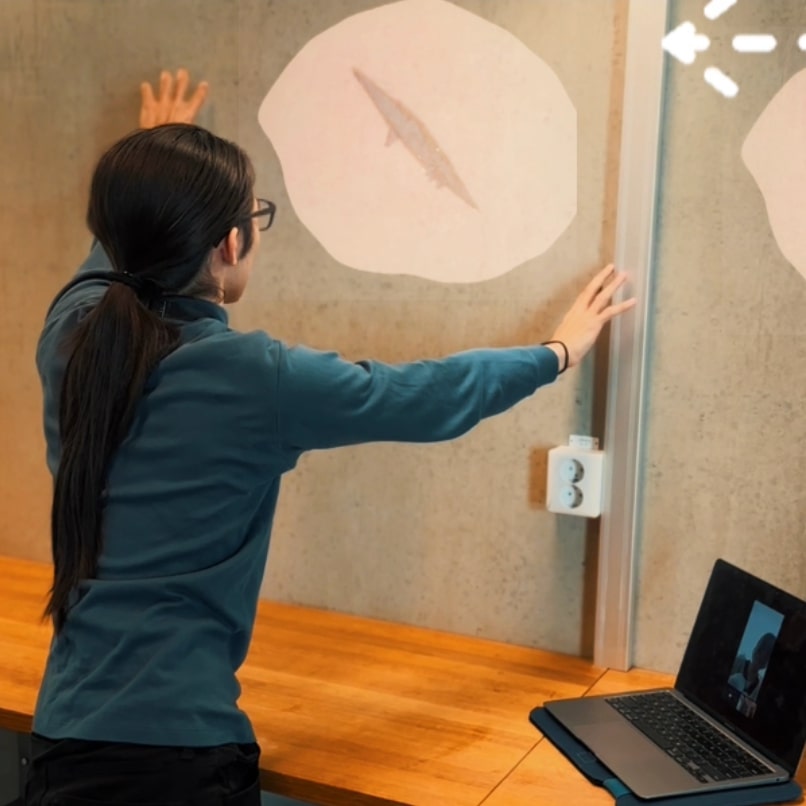
Problem
This project asked how remote wound monitoring could become more precise and easier to communicate between patients and healthcare providers. I focused on a situation where distance, uncertainty, and lack of visual continuity can make postoperative care more stressful.
Research & Process
I explored the problem through healthcare conversations, remote care scenarios, and concept development. The design direction moved toward AR because it could support visual comparison, guidance, and shared understanding instead of relying only on written descriptions or unclear photos.
"My goal was to reduce interpretation gaps: what the patient sees, what the doctor understands, and what the system helps both sides compare over time."
Key Decisions & Learning
The concept prioritized accuracy, privacy, and ease of use. I learned that healthcare UX cannot rely on impressive technology alone. The interaction has to build trust, make uncertainty visible, and support careful decision-making for both patients and professionals.
This project helped me understand how healthcare technology must support trust, clarity, and continuity. The concept became less about showing advanced technology and more about making remote wound assessment easier to understand.